
How to Choose the Right Replacement Trimmer Spool
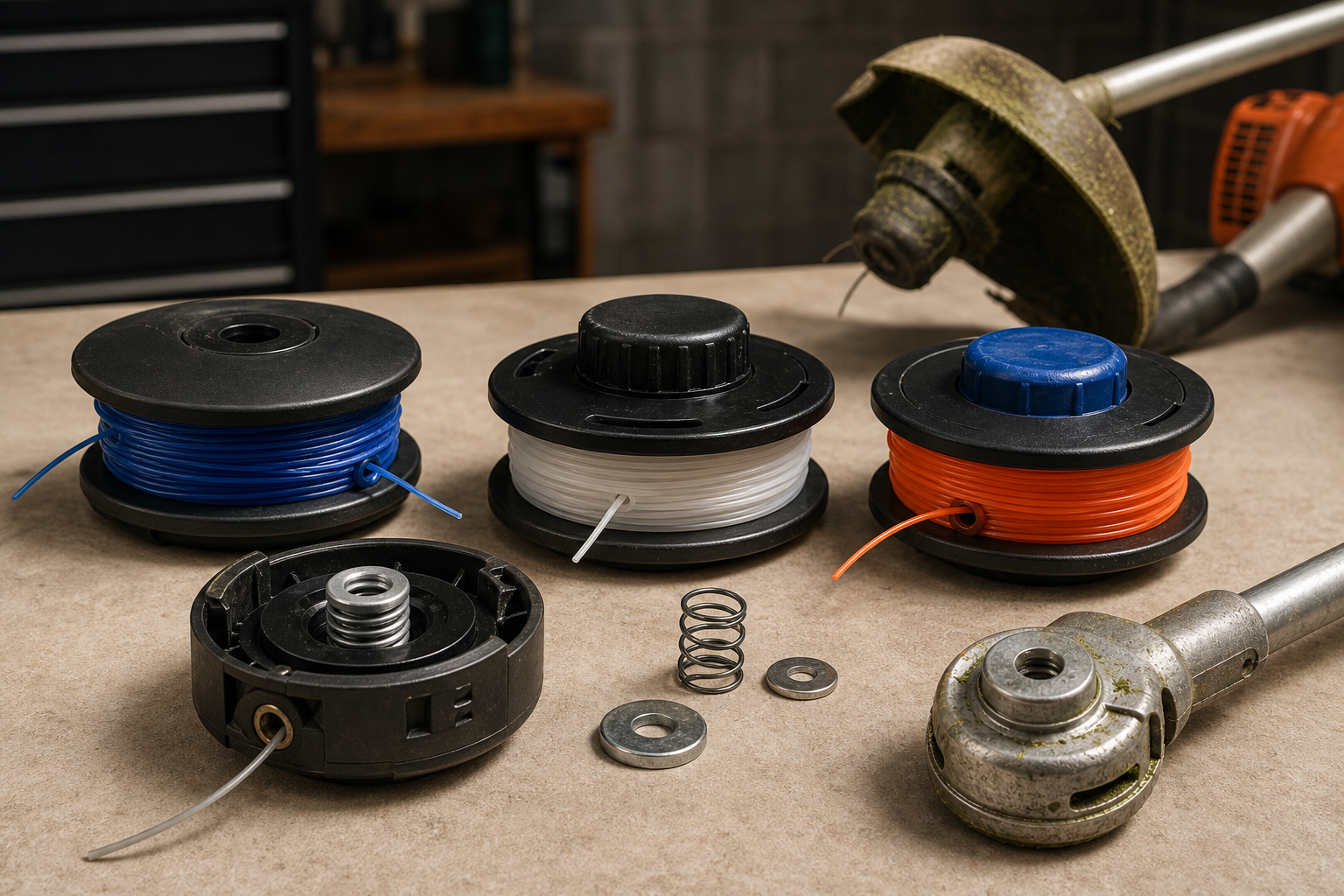
Explain how to match spool model numbers, line diameter, and feed style to compatible trimmers. Help shoppers avoid common fitment mistakes across major cordless lawn tool systems.
A replacement trimmer spool looks simple, but it has to match your machine in a few critical ways or it will cause endless frustration: poor feeding, line breakage, head vibration, or a spool that simply won’t lock in. If you’re replacing line on a cordless string trimmer, the safest approach is to match the spool model number first, then confirm line diameter and feed style. That extra two minutes of checking saves wasted money and gets your trimmer cutting the way it was designed to.
Start with the trimmer model, not just the brand
The most common mistake is buying by brand alone. A spool that fits one 18V or 20V trimmer from a major manufacturer may not fit another model from the same lineup. Even within one cordless tool system, head designs change over time.
Start by locating the trimmer’s full model number. On most cordless units, it’s printed on the motor housing, shaft label, or near the battery compartment. Write down the complete number, including any suffix letters. Those extra characters often matter.
Then check for one of these identifiers:
- Trimmer model number: the machine itself
- Spool or spool cap part number: often listed in the owner’s manual or parts diagram
- Replacement line cartridge number: common on auto-feed systems
If the original spool is still on hand, inspect it closely. Many have a molded or printed part number on the side or underside. Matching that number is more reliable than guessing by appearance.
A few practical checks help avoid ordering the wrong part:
- Compare the spool diameter and width
- Check the center bore shape and size
- Confirm the retaining tabs or cap style
- Look at how the line exits the head: single-line or dual-line
Even if two spools look nearly identical in photos, small differences in hub depth or tab position can make them incompatible.
Match the line diameter to the trimmer’s design
Once you’ve confirmed the spool fit, make sure the line diameter matches what the trimmer head is designed to use. This matters more than many people realize. Too thin, and the line may snap quickly or feed inconsistently. Too thick, and the motor can bog down, the spool may jam, or the line may not advance properly.
Common line diameters for cordless trimmers include:
- 0.065 in / 1.65 mm: light grass trimming, very common on smaller cordless units
- 0.080 in / 2.0 mm: heavier residential use, thicker grass
- 0.095 in / 2.4 mm: more typical on larger or higher-output trimmers, including some commercial-style units
Always follow the trimmer manufacturer’s specified range. Cordless machines are especially sensitive because the motor, battery draw, and spool feed system are designed around a particular line size.
Also pay attention to line format:
- Pre-wound spool: quickest and easiest, especially for casual users
- Bulk line for rewinding: cheaper over time, but only if the head is designed for manual winding
- Twisted, round, or serrated line: can affect noise, cutting efficiency, and battery runtime
For most homeowners, sticking with the original diameter and a good-quality round or twisted line is the most reliable option. Fancy line profiles only help if the head and power level can use them properly.
Know your feed style before you buy
Trimmer spools are tied to a specific feed mechanism, and this is where a lot of compatibility problems happen. A spool isn’t just a container for line; it works with the head’s internal feed system.
The main types are:
-
Auto-feed The line advances automatically when the trimmer starts or when line length drops. These systems usually require a very specific spool design.
-
Bump-feed The user taps the trimmer head on the ground to advance line. The spool, spring, and cap all need to match the head assembly.
-
Fixed-line or blade-style replacement Some lightweight cordless trimmers use short pre-cut pieces instead of a wound spool.
If your trimmer uses an auto-feed cartridge, don’t assume a manually wound spool will substitute. Likewise, a spool meant for a bump-feed head often won’t function correctly in an auto-feed unit even if it physically fits.
Before ordering, check:
- Whether your trimmer uses single-line or dual-line feed
- Whether the spool comes with the cap and spring or spool only
- Whether the trimmer head requires left-hand or right-hand winding direction
- Whether the replacement is factory pre-wound or intended for user loading
If line winds the wrong way, it may unravel inside the head or fail to advance under load.
Avoid common fitment mistakes across cordless lawn tool systems
Battery platform loyalty makes shopping easier, but it can also create false confidence. Just because two tools share the same battery doesn’t mean they share the same spool.
Here are the fitment mistakes I see most often:
-
Matching voltage instead of model An 18V or 40V label tells you about the battery system, not the trimmer head.
-
Assuming all spools in a product family interchange Manufacturers often revise head designs mid-generation.
-
Ignoring regional part differences Some models sold in different markets use different replacement part numbers.
-
Buying by photo only Product images can represent multiple compatible variants.
-
Overfilling a rewind spool Even the correct spool won’t feed well if it’s packed with too much line.
A smart buying routine is simple:
- Find the full trimmer model number.
- Match the original spool part number if possible.
- Confirm line diameter and feed type.
- Check whether you need spool only, spool plus cap, or a complete head assembly.
For DIY users and tradespeople alike, it’s worth keeping a spare correct spool on hand. Downtime in the middle of a job usually costs more than the extra part.
FAQ
Can I use a slightly thicker line if it fits in the spool?
Not recommended unless the trimmer manufacturer specifically allows it. A thicker line increases load on the motor and can reduce feed performance, especially on cordless trimmers.
Why does my replacement spool fit physically but not feed properly?
Usually because the feed style, winding direction, or internal spool shape doesn’t match the head design. Physical fit alone is not enough.
Is a generic replacement spool okay to use?
It can be, if the dimensions, part number cross-reference, line diameter, and feed style all match correctly. A good aftermarket spool can offer solid value, but fitment needs to be verified carefully.