§ How-To
Heavy Duty Garage Tool Organizer Wall Mount Checklist
Before buying a heavy-duty garage tool organizer, check wall structure, hook spacing, tool weight, and whether the layout supports daily use.
Published
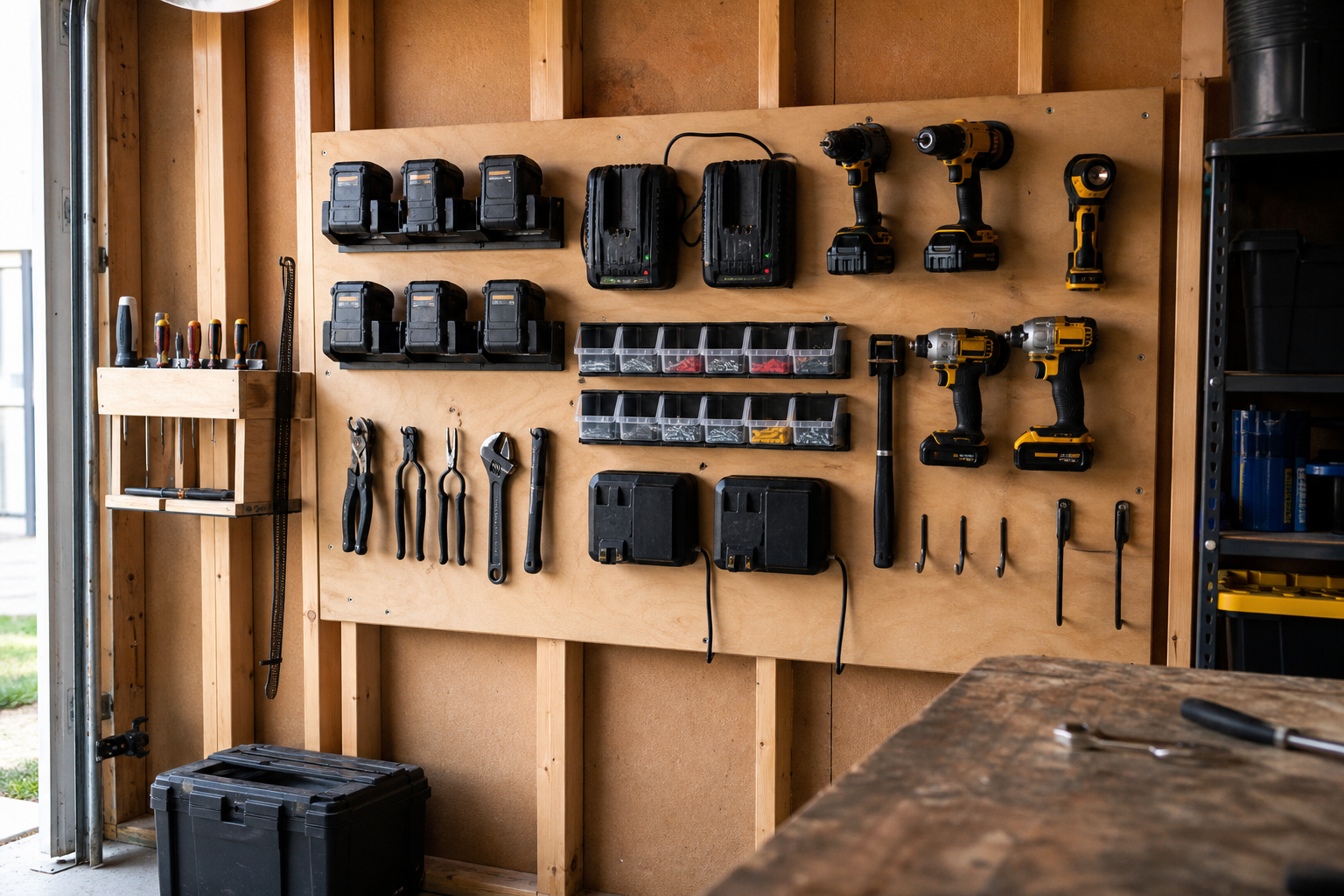
A heavy-duty garage tool organizer is only as strong as the wall and layout behind it. The best rack is not the one with the biggest claim on the box; it is the one that keeps the tools you use most visible, reachable, and safely supported.
Pre-buy checklist
| Check | What to confirm |
|---|---|
| Wall type | Studs, plywood backer, masonry, or drywall |
| Tool weight | Drills, saws, batteries, yard tools, chargers |
| Hook spacing | Enough clearance for handles and guards |
| Daily workflow | Most-used tools closest to the bench |
| Expansion | Room for future batteries and accessories |
Do not mount by weight rating alone
Rack ratings assume proper fasteners and a strong mounting surface. A rack rated for heavy tools can still fail if mounted into weak drywall. For loaded cordless tools, a plywood backer across studs gives more flexibility and support.
Spacing matters
Crowded hooks look efficient in product photos, but they slow you down. Leave enough room to lift tools out without bumping batteries, chargers, or adjacent handles.
Best layout
- Charging shelf near an outlet.
- Battery holders below or beside chargers.
- Drill and driver slots at chest height.
- Saws and heavier tools lower.
- Small hardware bins near the workbench.
See how to build a clean tool wall for a full wall-planning approach.
FAQ
Are metal organizers better than plastic?
Metal usually handles weight and heat better. Plastic can work for light batteries, small parts, and low-load holders.
Should yard tools share the same rack as power tools?
Only if there is enough spacing. Long-handled yard tools often need a separate rail so they do not block chargers and battery slots.
Find the right part on Amazon
Check price, stock and fitment — ships direct from Amazon.
§ Catalog
Shop the catalog


