§ Journal · Jun 2, 2026
Spring Garage Reset — Organize Your Tool Wall Before Yard Season Hits
Clear the winter clutter, mount your cordless tools and batteries on the wall, and get your garage ready for yard season in one focused weekend.
Published
Spring Garage Reset — Organize Your Tool Wall Before Yard Season Hits
Winter is hard on garages. By the time the weather breaks, most garage spaces have accumulated months of indoor project clutter, holiday storage overflow, and tools that never made it back to where they belong. The string trimmer is buried behind a snow blower. Batteries are scattered across the workbench, some charged, most not. The drill you need is in a bin under two bags of road salt.
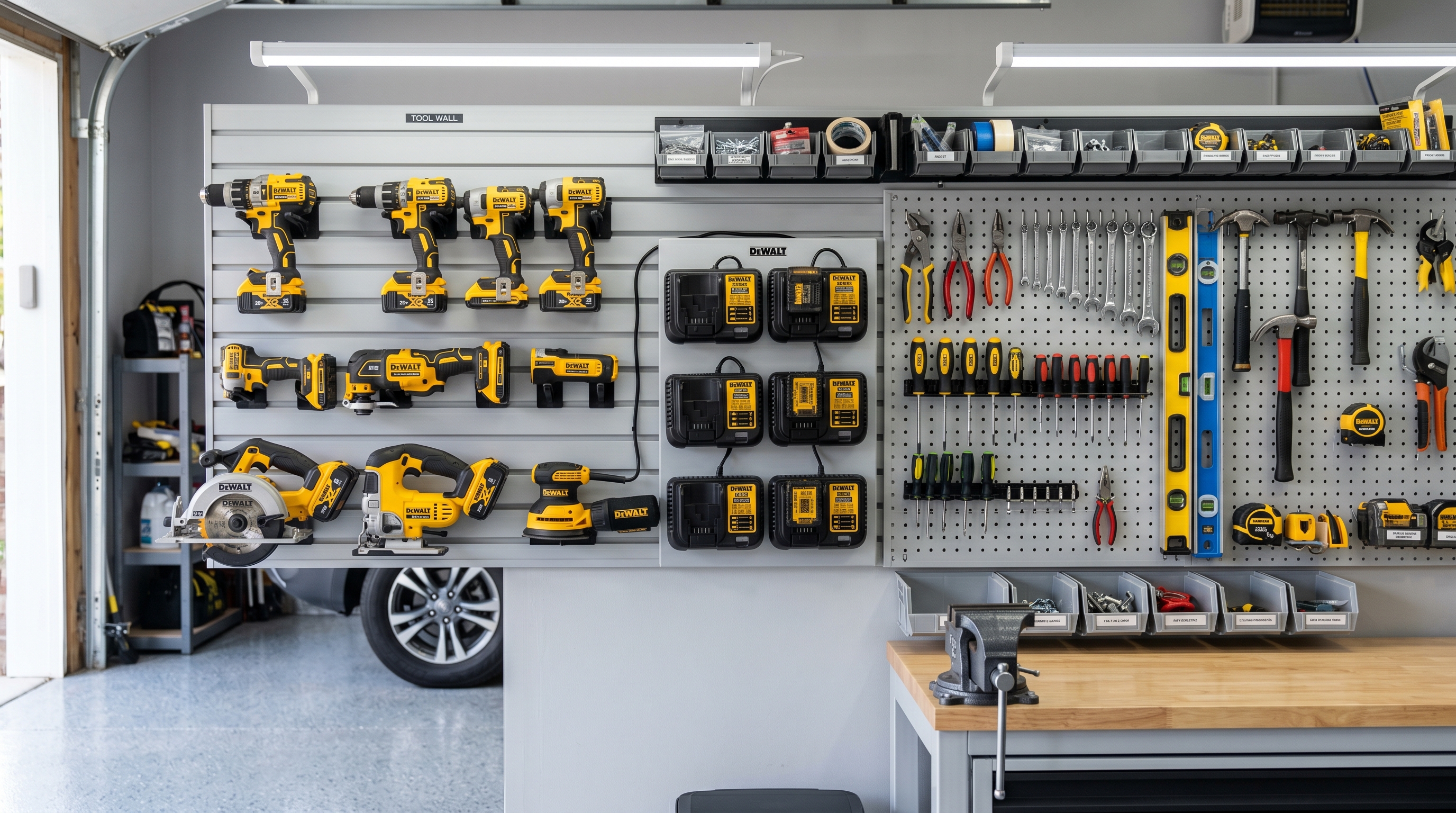
Before the first mow of the year, a focused garage reset puts everything back in working order. The best investment you can make is a dedicated tool wall that keeps cordless tools, batteries, and outdoor equipment visible and accessible. Here is how to do it in one weekend.
Start with a full cleanout
Before mounting anything, empty the problem areas. Pull tools off benches, clear the floor near the garage door, and gather every battery and charger you own into one spot. This step is not optional. You cannot organize what you cannot see, and most garages have gear in five or six different locations that should really live in one.
Sort everything into groups:
- Cordless outdoor tools (trimmer, blower, hedge trimmer, edger)
- Cordless shop tools (drill, impact driver, circular saw, reciprocating saw)
- Batteries by platform (DeWalt, Milwaukee, Ryobi, Makita, etc.)
- Chargers
- Consumables and replacement parts (trimmer spools, line, caps, screws)
- Items that do not belong in the garage at all
That last category matters. A lot of garage clutter comes from items that migrated from the house and never left. Remove them first.
Plan the wall layout by task zone
A good tool wall is not just hooks on drywall. It is a layout designed around how you actually work. The most effective approach is to create task zones — groups of tools, batteries, and accessories organized by the jobs they serve.
Outdoor tool zone
Place this zone nearest to the garage door or yard exit. Mount your string trimmer, blower, and hedge trimmer on heavy-duty wall hooks or dedicated tool holders. Below or beside them, install a battery rack sized for the platform those tools use. If all your outdoor tools run on the same battery system, this becomes a self-contained station where you grab the tool, grab a charged battery, and walk out.
Keep consumables close. A small bin with replacement trimmer spools, bulk line, spool caps, and guard hardware should sit within arm’s reach. When the head runs out mid-job, you do not want to dig through a drawer.
Shop tool zone
Drills, drivers, and saws get their own section, ideally near the workbench. Mount them on rail-clip holders or pegboard brackets at a comfortable reach height. Group batteries for shop tools separately from outdoor batteries if you run different platforms, or keep a shared battery rack between both zones if everything is on the same system.
For a detailed walkthrough of building a clean, efficient tool wall from scratch, see our guide on how to build a clean tool wall.
Battery and charging station
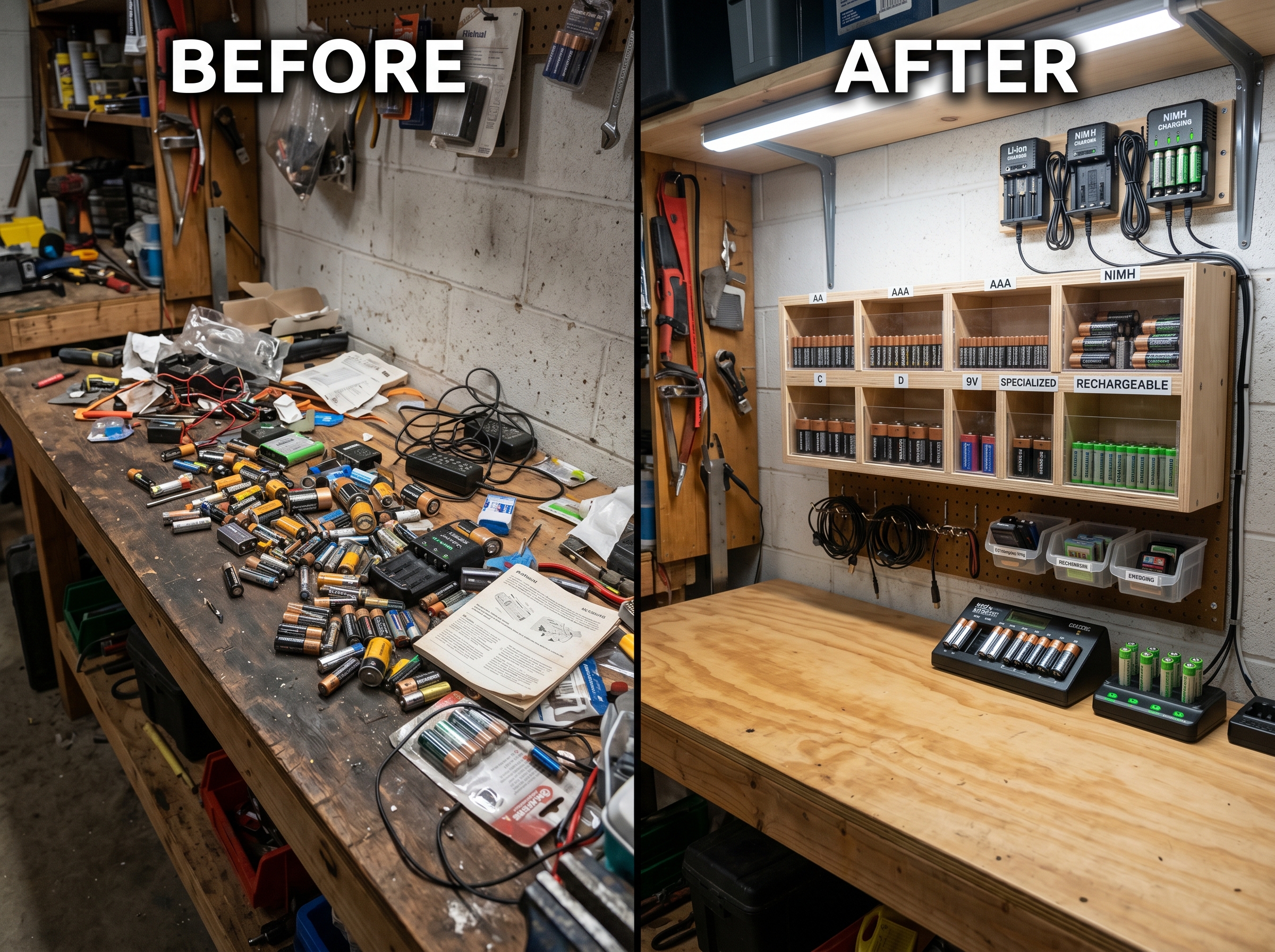
Dedicate a wall section to battery management. Mount chargers at chest height where cords are controlled and airflow is not blocked. Below the chargers, install a battery rack that separates charged packs from depleted ones. This single upgrade eliminates the most common garage frustration: reaching for a battery and finding it dead.
If you run tools across multiple battery platforms, organize the rack by brand. A mixed pile of DeWalt, Milwaukee, and Ryobi packs with no clear system leads to wasted time every single session. Our guide on organizing cordless tools by battery platform covers this in detail.
Mount batteries off the floor
One of the most overlooked problems in garage storage is batteries sitting on concrete floors, especially through winter. Cold concrete saps heat from lithium-ion cells, and moisture from condensation or minor flooding can corrode terminals. Even batteries sitting on a low shelf near the floor are at risk in unheated spaces.
Wall-mounted battery holders solve this completely. They keep packs at a comfortable height, off cold surfaces, and in circulating air. For garages, trailers, or truck beds, proper mounting also prevents batteries from shifting, falling, or getting buried under other gear. See our guide on mounting battery holders in a garage, trailer, or truck for specific installation tips.
Test and charge everything before you mount it
Spring is the right time to test every battery in your collection. Put each pack on the charger and note which ones charge fully, which ones take unusually long, and which ones the charger rejects. Batteries that sat through winter at full charge or near-empty may have degraded. Better to identify weak packs now than to discover them when you are halfway through edging the driveway.
Once you know which batteries are healthy, charge them to full and mount them in the ready rack. Set aside questionable packs for further testing or replacement.
Keep the reset from unraveling
The hardest part of garage organization is maintaining it. A spring reset is worthless if the garage returns to chaos by July. A few habits that keep the system working:
- Return every tool to its mount after each use. No exceptions.
- Put depleted batteries on the charger immediately. Do not set them on the bench “for later.”
- Restock consumables before you run out. When you open the last trimmer spool, order more that day.
- Do a quick 10-minute tidy at the end of each weekend. Catch small problems before they become big ones.
A dedicated tool wall is not about making the garage look good for a photo. It is about making every job faster and every tool easier to find. One weekend of focused work in the spring sets the tone for the entire yard season.
Find the right part on Amazon
Check price, stock and fitment — ships direct from Amazon.
§ Catalog
Shop the catalog


