§ Journal · Jun 2, 2026
Winter Battery Storage — How to Store Cordless Tool Batteries Without Killing Them
Cold weather and bad storage habits destroy lithium-ion batteries. Here is how to store cordless tool batteries through winter without losing capacity or shortening their lifespan.
Published
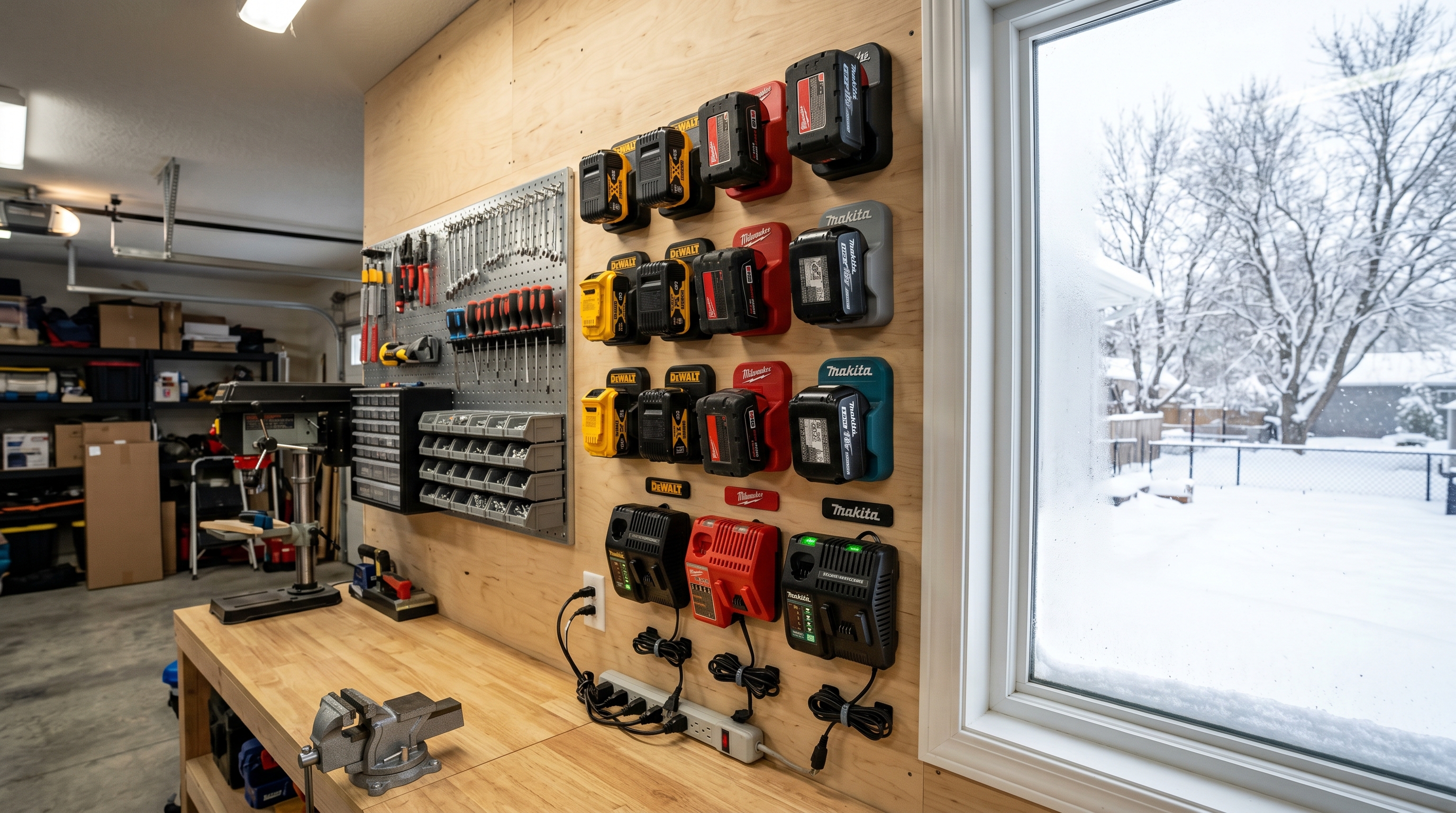
Winter Battery Storage — How to Store Cordless Tool Batteries Without Killing Them
When yard season ends, most people park their string trimmer, blower, and hedge trimmer in a corner of the garage and forget about them until spring. The tools themselves usually survive fine. The batteries are another story. Lithium-ion packs are sensitive to temperature extremes, charge state during storage, and moisture. A few months of neglect in an unheated garage can permanently reduce capacity or kill a battery outright.
Here is what actually matters for winter battery storage, and how a few simple steps protect the packs you have already invested in.
Do not store batteries fully charged or fully depleted
This is the single most important rule, and most people get it wrong in one direction or the other.
Lithium-ion cells experience the most stress at the extremes of their charge range. A battery stored at 100% charge for months undergoes chemical degradation that reduces its total capacity over time. A battery stored at 0% risks dropping below the minimum cell voltage threshold, which can make the pack unrecoverable — the charger will refuse to charge it, and the battery is effectively dead.
The ideal storage charge level is between 30% and 50%. At this range, the internal chemistry is stable, self-discharge is minimal, and the cells are not under stress. Most cordless tool batteries have a fuel gauge — four or five LED indicators on the side of the pack. Two out of four lights lit (roughly 50%) is a good target before putting batteries away for the season.
If your batteries do not have a gauge, charge them for a short period after a moderate use session. Do not top them off to full. The goal is a mid-range charge, not a full one.
Temperature matters more than most people realize
Lithium-ion batteries should be stored between 50 and 77 degrees Fahrenheit (10 to 25 degrees Celsius). Room temperature in a heated part of the house is perfect. The problem is that most people store batteries in the garage, shed, or workshop — spaces that are not climate-controlled.
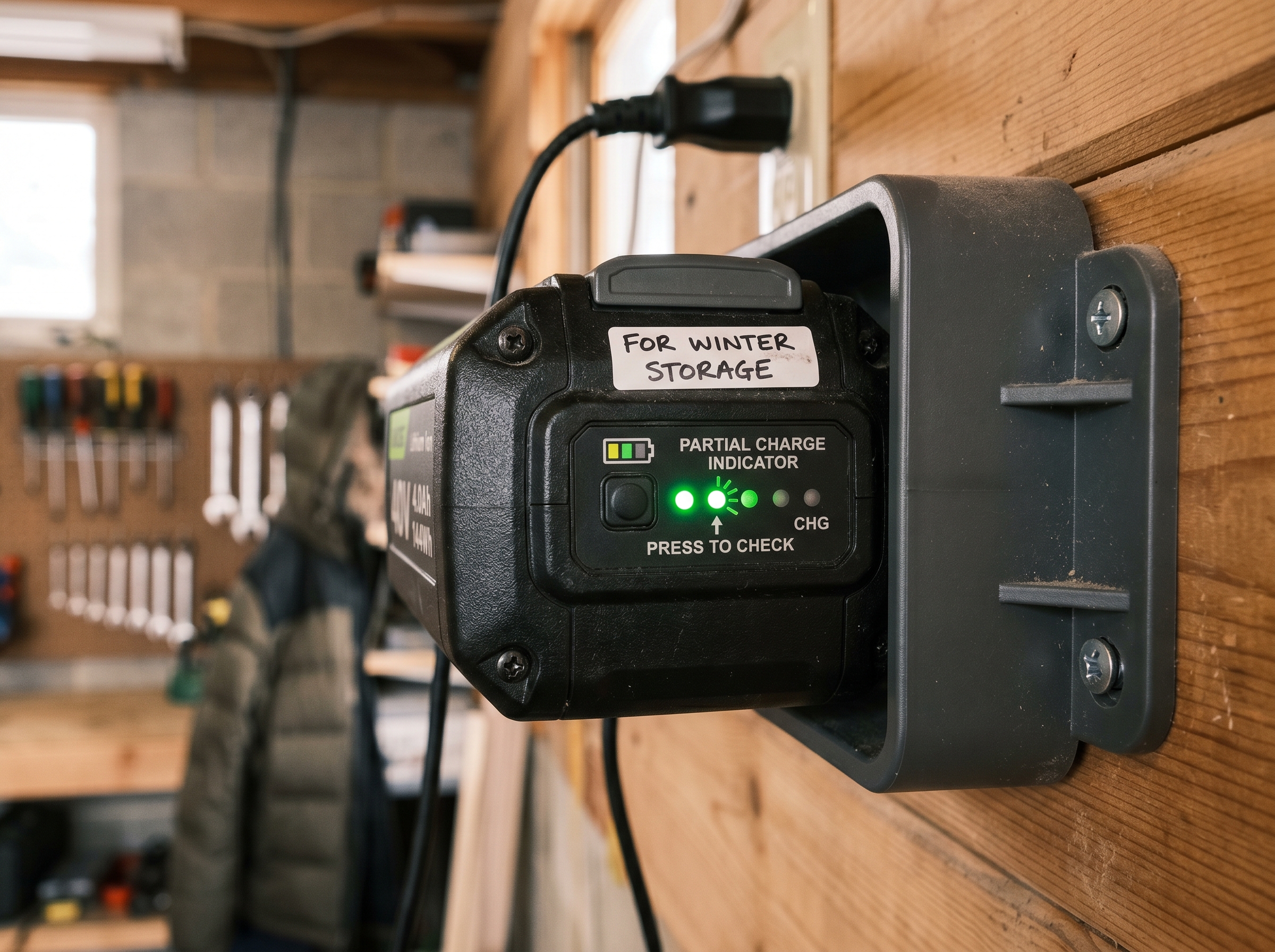
In cold climates, an unheated garage can drop well below freezing for weeks at a time. While lithium-ion batteries will not explode in the cold, low temperatures accelerate capacity loss during storage, increase internal resistance, and can cause permanent damage if the cells freeze with moisture present.
Heat is equally dangerous. Batteries stored near a furnace, water heater, or in direct sunlight through a garage window can overheat, accelerating chemical breakdown.
The practical advice: if your garage is unheated, bring batteries indoors for winter. A shelf in the basement, a closet, or a utility room works. The tools can stay in the garage. The batteries should not.
Moisture is the silent killer
Unheated garages and sheds are prone to condensation, especially during temperature swings in fall and early spring. When warm, humid air meets cold surfaces, water condenses on everything — including battery terminals, contact plates, and the electronic components inside the pack housing.
Moisture on terminals causes corrosion, which increases resistance and reduces charging efficiency. In severe cases, moisture inside the battery housing can cause short circuits or damage the battery management system (BMS) that protects the cells.
To reduce moisture risk:
- Store batteries in a dry, indoor space whenever possible
- If batteries must stay in the garage, keep them in a sealed plastic bin with a silica gel desiccant packet
- Never store batteries directly on a concrete floor — concrete wicks moisture and stays cold
- Wipe terminals clean and dry before storage
Wall mounts keep batteries off cold concrete floors
This point deserves its own section because it addresses a common storage mistake. Many people set batteries on a garage shelf, workbench, or directly on the floor. In winter, the floor and low shelves are the coldest, dampest zones in the space.
Wall-mounted battery holders solve two problems at once. They elevate batteries away from cold surfaces and keep them in circulating air rather than sitting in the stagnant cold layer near the floor. Even in an unheated garage, wall-mounted storage is significantly better than floor-level storage because warm air rises and the temperature a few feet off the ground can be several degrees warmer.
If you keep a large collection of cordless tool batteries, wall-mounted racks also make it easy to visually check charge levels before the season starts. Instead of digging through a bin, you can scan the fuel gauges on every pack from across the room. For tips on organizing a larger battery collection, see our guide on organizing cordless tool batteries.
Check stored batteries every 4 to 6 weeks
Lithium-ion batteries self-discharge slowly, even when not in use. Over several months, a battery stored at 50% can drop to 20% or lower. If it drops far enough, the cells may fall below the safe voltage threshold.
Set a reminder to check stored batteries once a month or so. If the fuel gauge shows only one light or none, give the battery a short charge to bring it back to the 30-50% range. Do not charge it to full — just enough to keep the cells in the safe zone.
This is especially important for older batteries that may have higher self-discharge rates. A pack that was borderline before storage can tip into unrecoverable territory over a long winter.
Prepare batteries for spring use
When yard season returns, do not just grab a stored battery, slam it into the trimmer, and start working. Take a few minutes to prepare:
- Inspect each battery for visible corrosion, swelling, or damage
- Wipe terminals with a clean, dry cloth
- Fully charge every battery before first use
- Run each battery through a normal work cycle and note any that seem weak or die quickly
- Replace packs that no longer hold a useful charge
A battery that survived winter storage in good condition should perform close to its pre-storage level. One that was stored badly — fully charged on a cold concrete floor for five months — may have lost noticeable capacity.
The short version
Store batteries at 30-50% charge, in a dry space between 50 and 77 degrees Fahrenheit, off the floor, and check them monthly. That is the entire protocol. It takes almost no effort, and it can add years to the useful life of every pack in your collection. Wall-mounted holders in a climate-controlled space are the ideal setup. If that is not possible, a sealed bin with desiccant in the warmest, driest corner of the garage is the next best option.
The cost of replacing a dead battery pack is almost always more than the cost of storing it properly. A few minutes of preparation in the fall saves real money in the spring.
Find the right part on Amazon
Check price, stock and fitment — ships direct from Amazon.
§ Catalog
Shop the catalog


